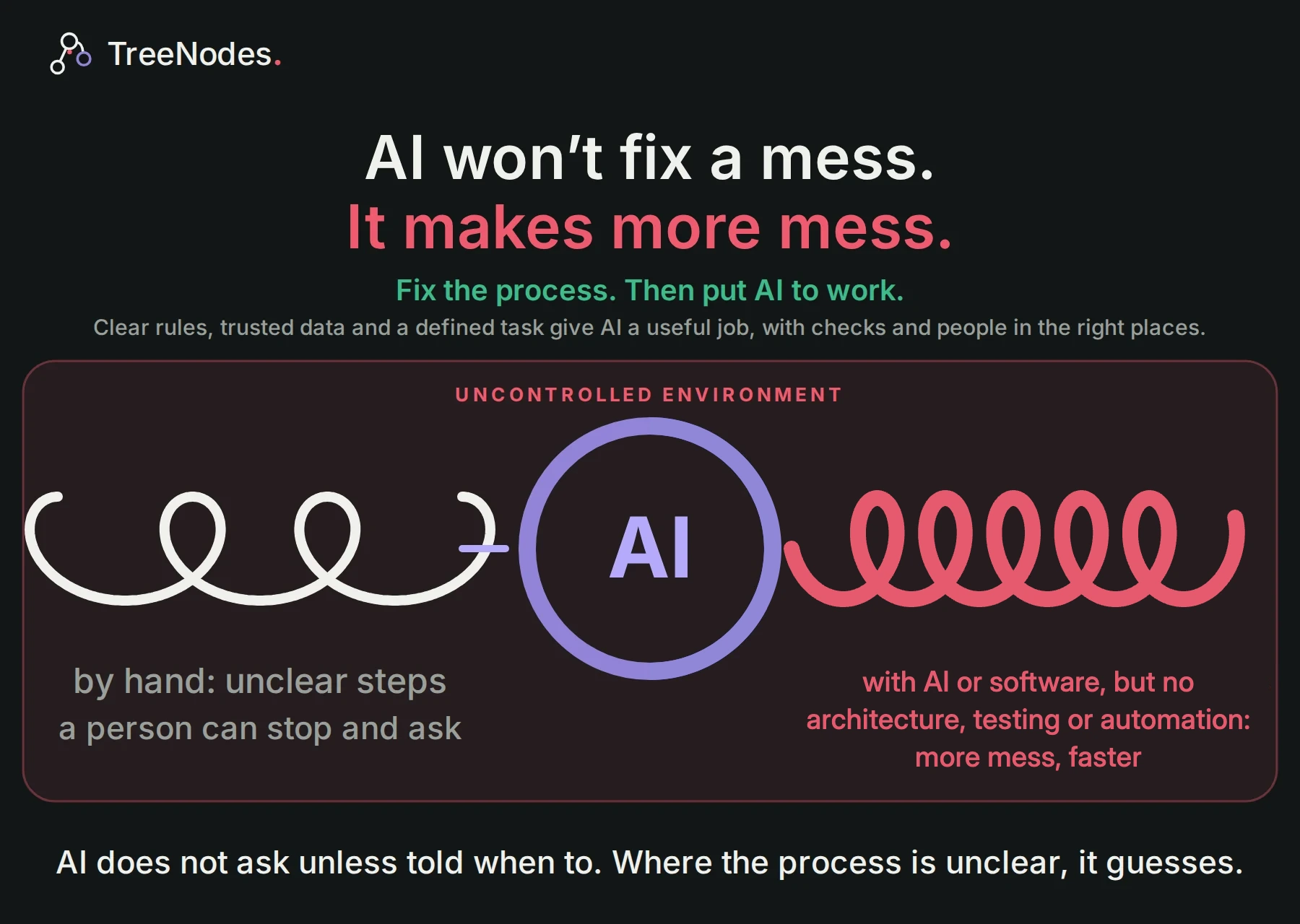
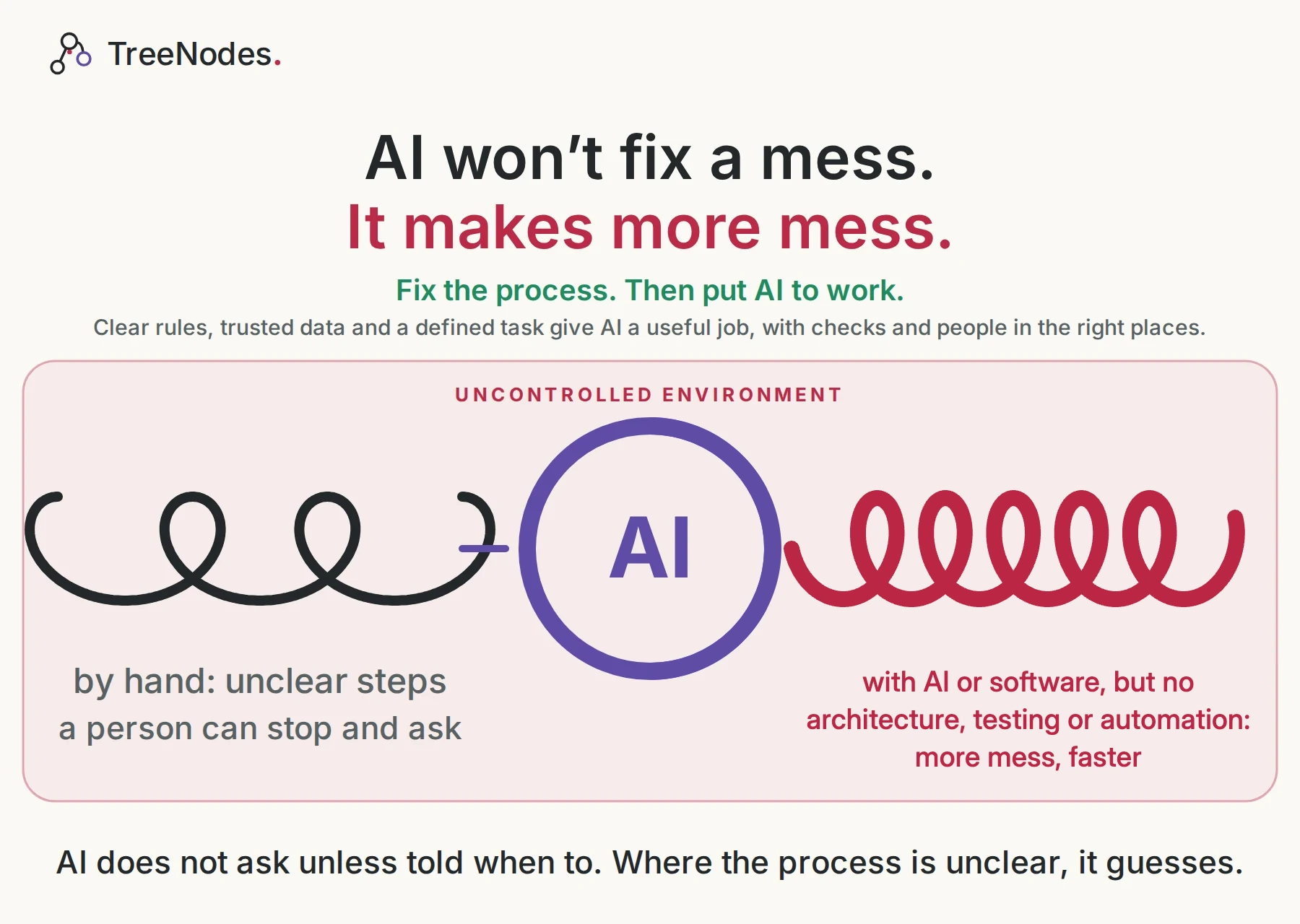
AI won’t fix a mess. It makes more mess.
Fix the process. Then put AI to work. Clear rules, trusted data and a defined task give AI a useful job, with checks and people in the right places.
 Nermien Barakat, Software Architect & Engineer · 2 October 2026
From the problem to the fix
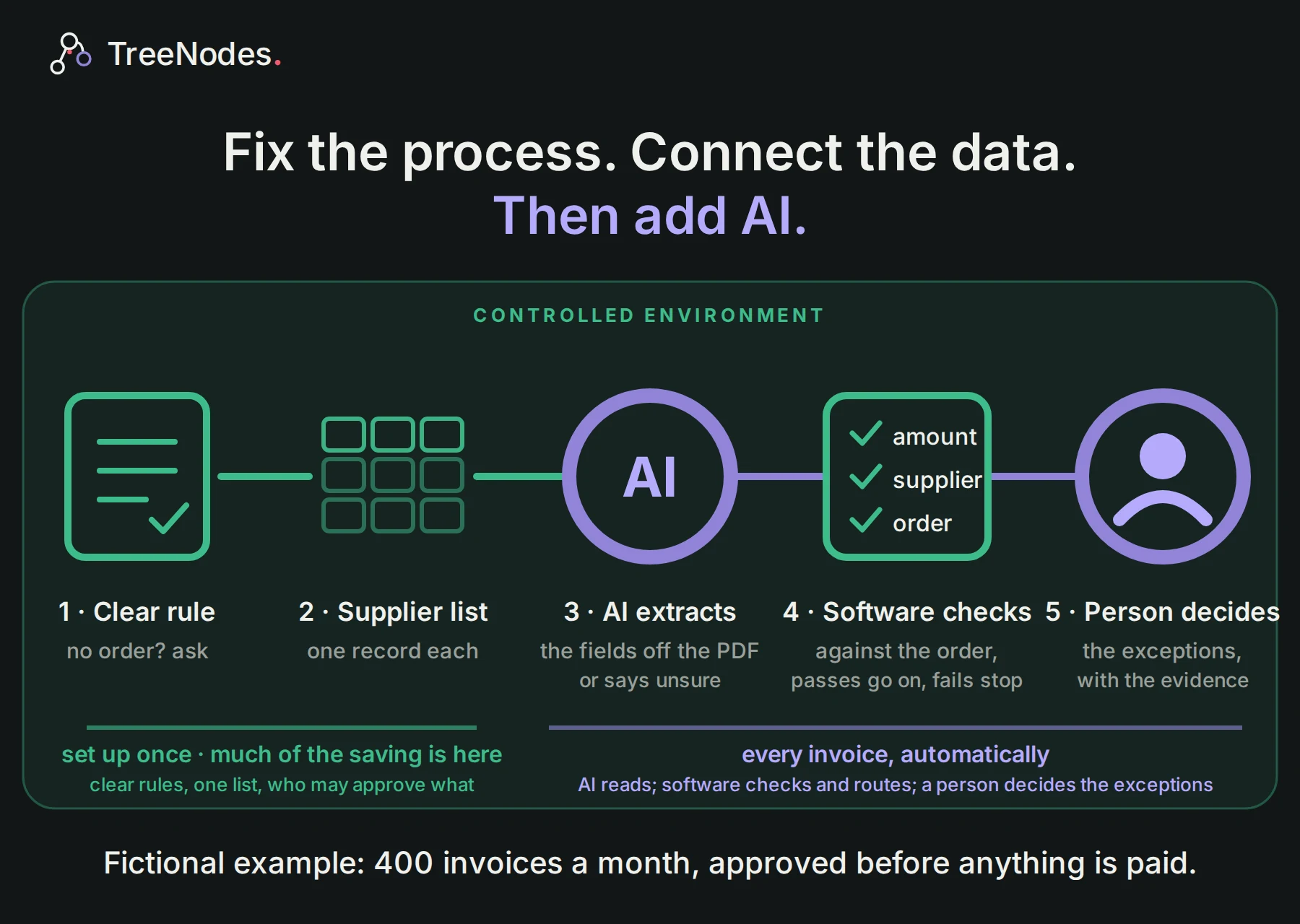
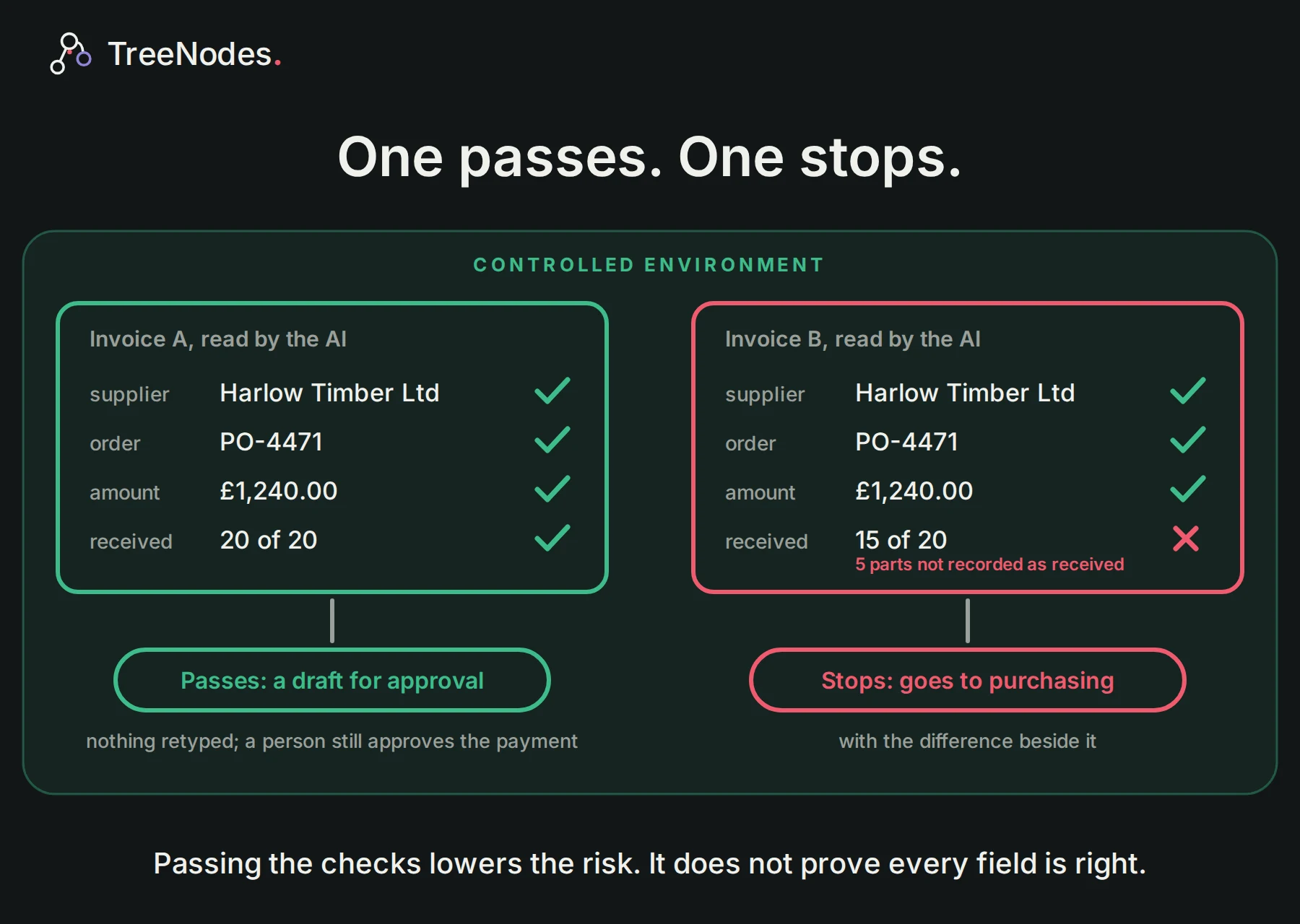
The note in 85 seconds
Video · no sound
The slides, plus the order to do it in, as a short silent video. The text on this page is its transcript.
The problem
Where a step is unclear, a person can stop and ask. People guess too, but the option is there. A model, unless told when to stop, guesses, confidently, and at volume, so the task has to make uncertainty visible and give the model a way to escalate. Michael Hammer warned in 1990 against automating a bad process instead of fixing it. AI makes the warning sharper.
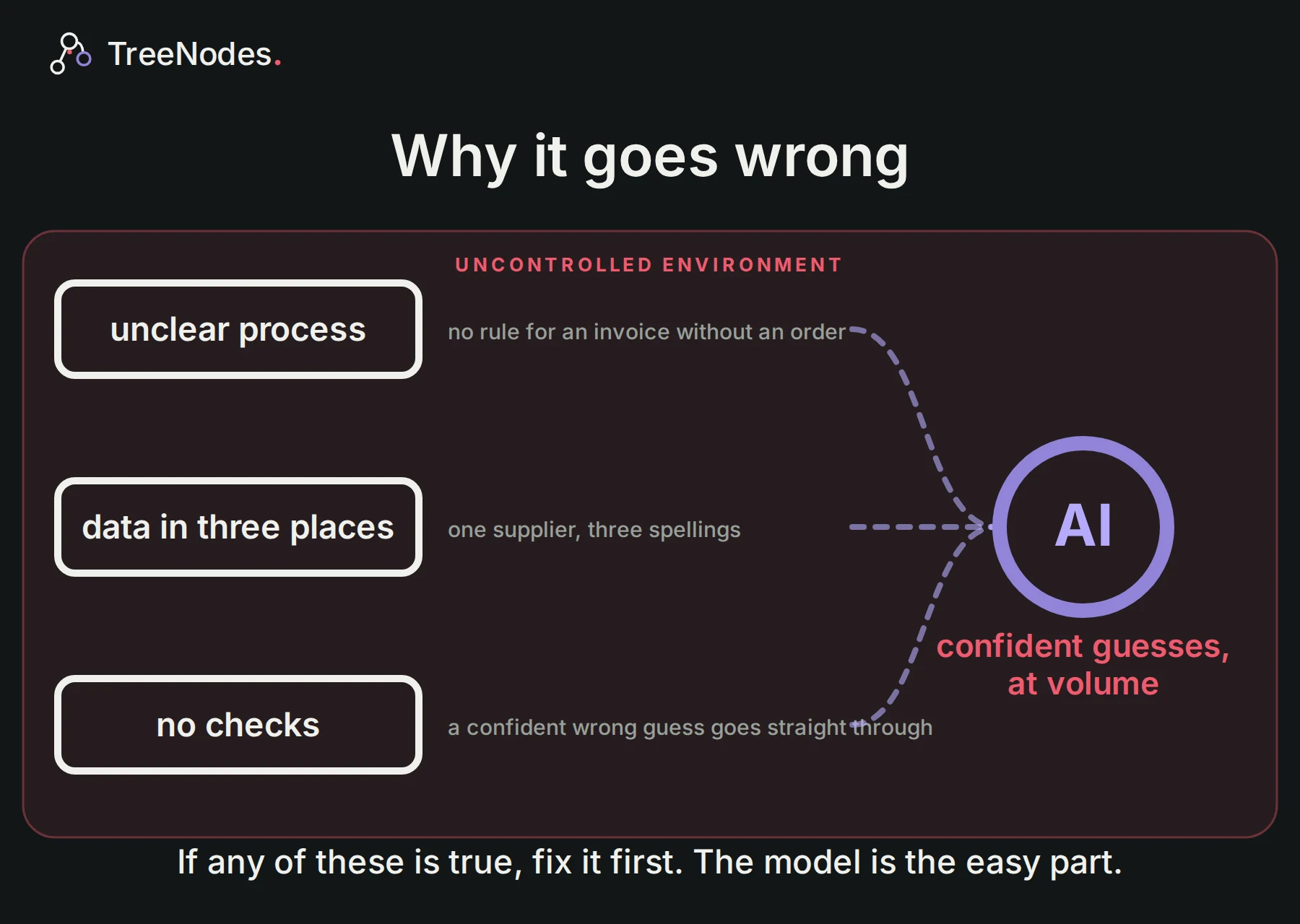
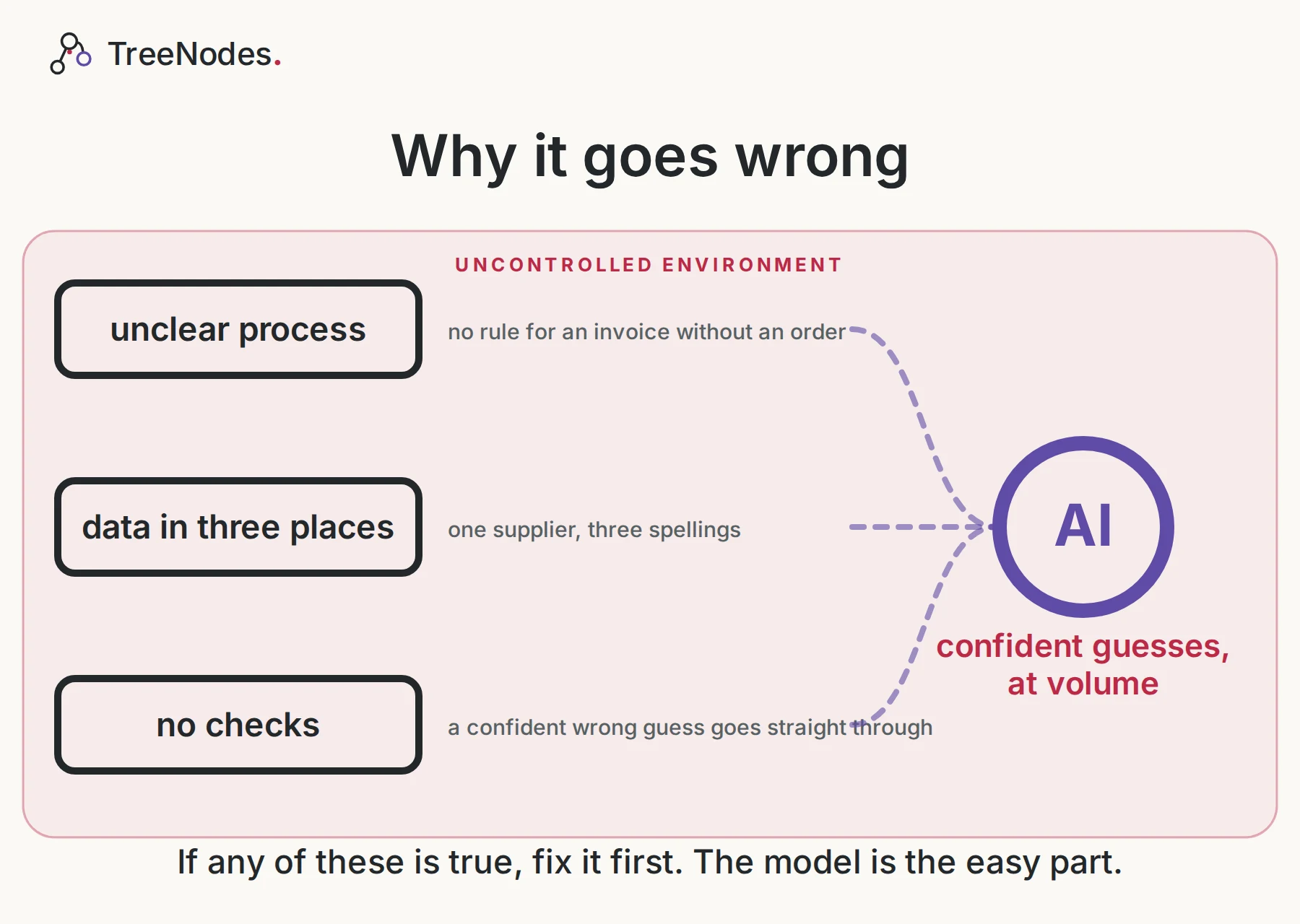
Ask AI to sort a shared inbox before anyone has agreed who handles what, and requests are routed on a guess. Ask it to read invoices when the supplier list has three spellings of one company, and duplicates appear at machine speed. The same pattern runs through a factory’s maintenance requests, a clinic’s referral letters and a building site’s daily reports: something arrives, someone reads it, decides, and passes it on. AI is good at the reading, the sorting, spotting inconsistencies and a first draft of the reply. It can even suggest a rule; your business decides which rule applies.
Three questions first
Can someone describe the process, with its exceptions and who decides? Is there an agreed, trusted source for each fact, and do you know where the data goes when a model reads it? And when the AI is wrong, how will anyone know?
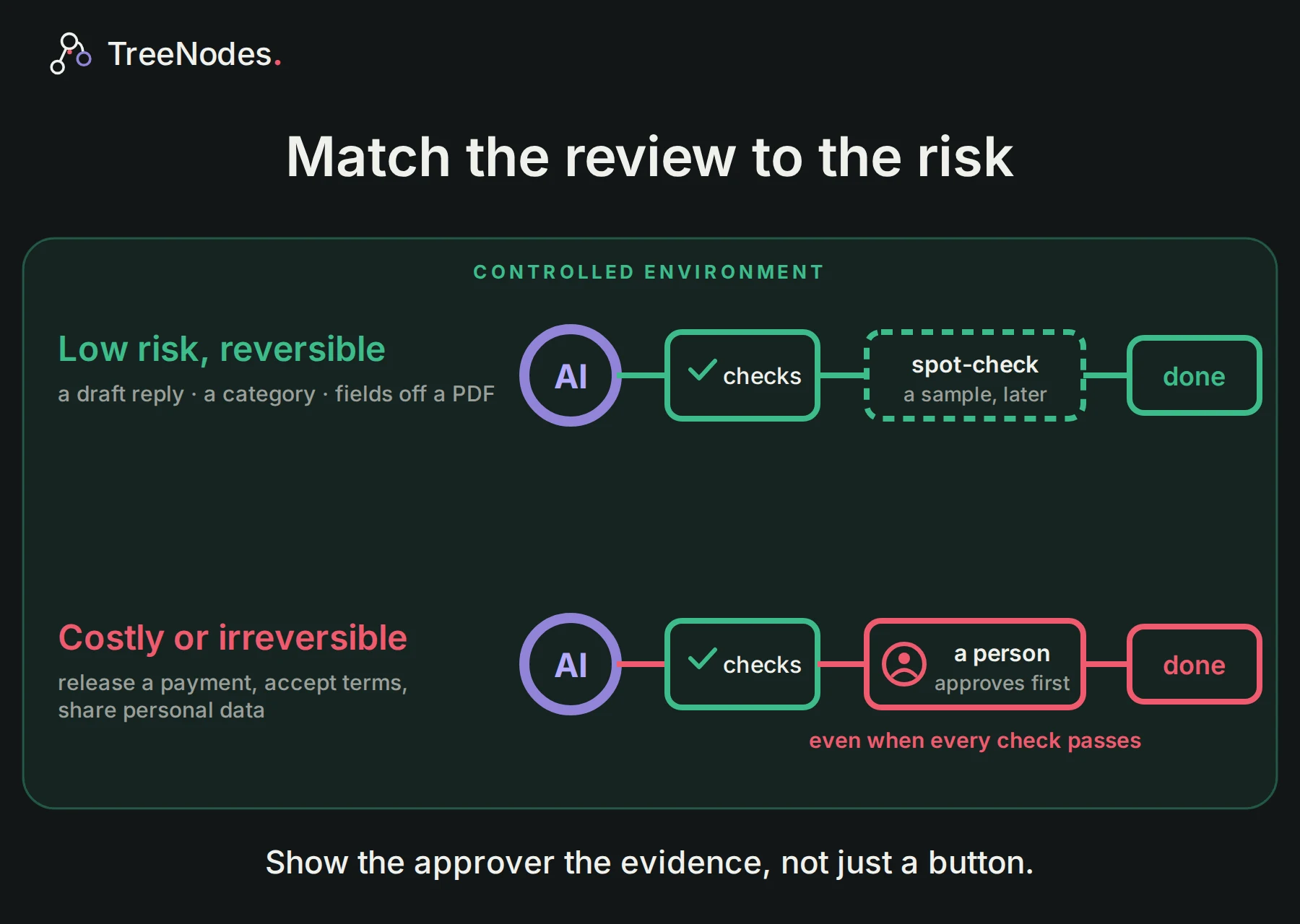
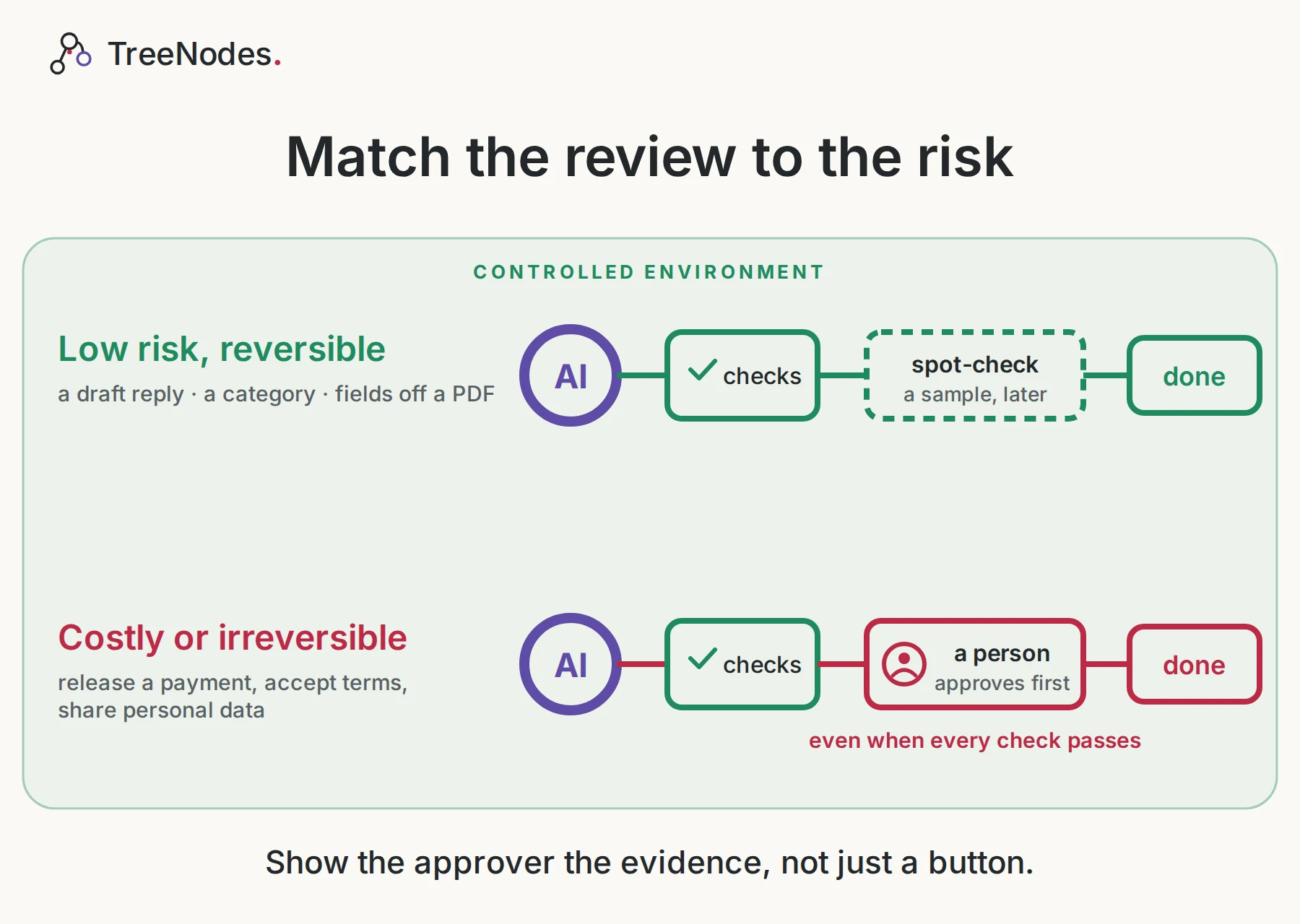
The last one has a trap. A model’s own confidence cannot be trusted on its own; it can be wrong and certain. A measured score, tested against cases with known answers, can help decide what gets a second look; the model’s say-so cannot. So the model does the narrow job, reading the fields off the PDF, and ordinary software checks them against the order and routes them: what passes moves on, what fails goes to a person, with the evidence beside it. Passing the checks lowers the risk; it does not prove every field is right, which is why a sample of what passed is spot-checked later. And where a mistake would be costly or cannot be undone, a payment, a contract, personal data, a person approves before the final step, even when every check passes.
A pilot, not a leap of faith
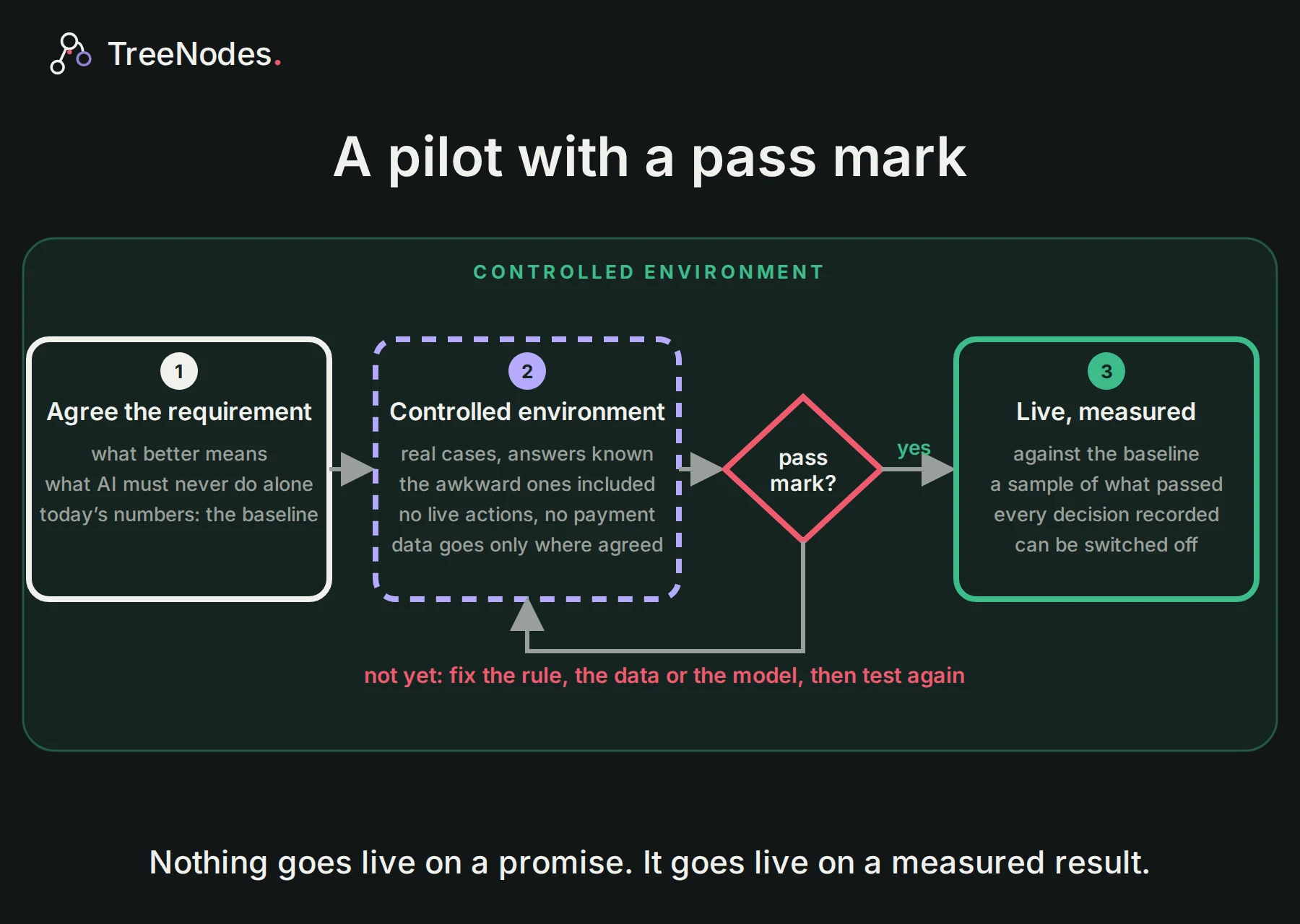
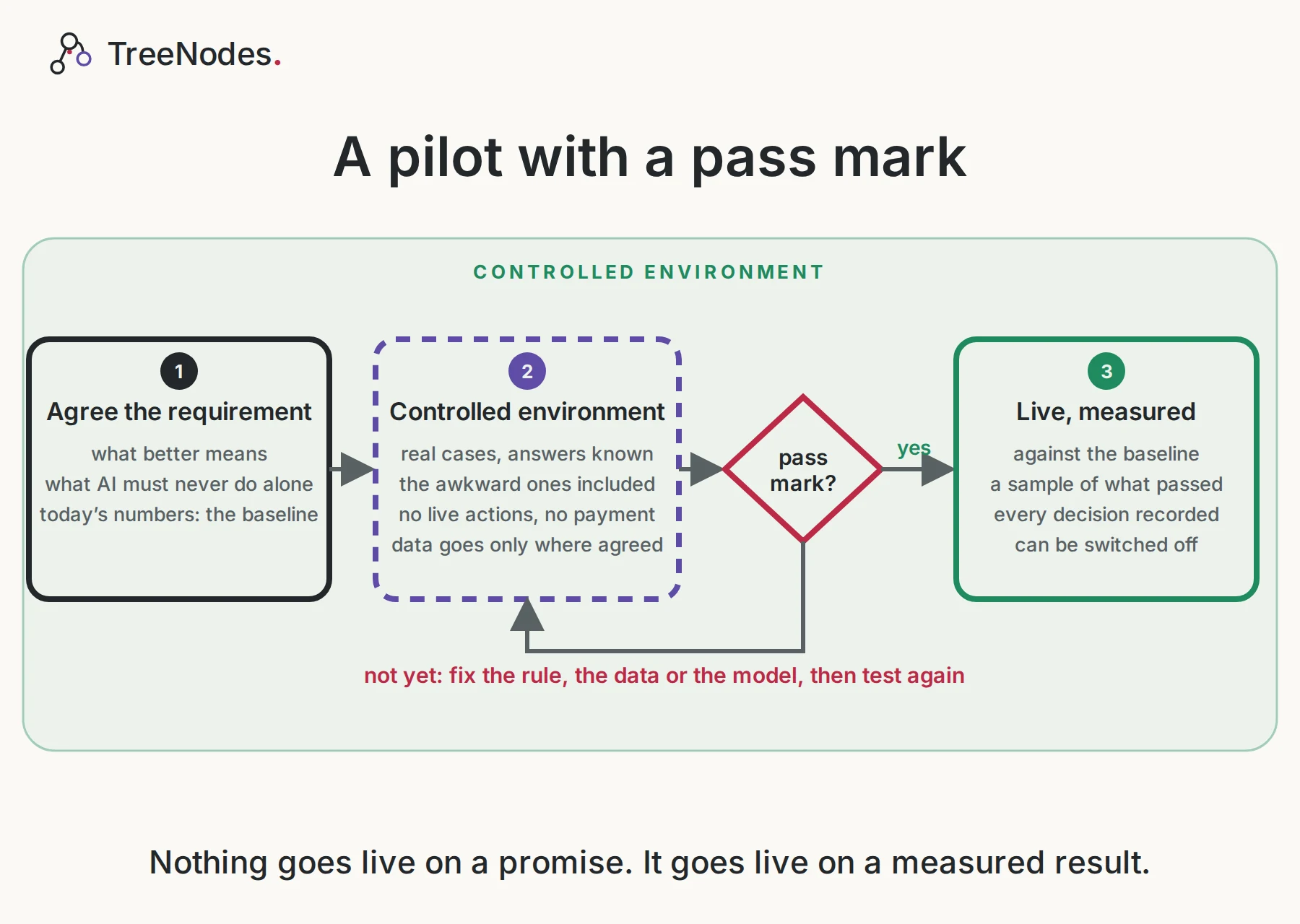
In our experience, a clearer process and connected data deliver much of the saving before any model is involved. What is left for the AI is small, testable and checked, and it is run as a pilot: a small trial on one process, for a set period, with a pass mark agreed before it starts. Agree what better means and measure today’s numbers as the baseline. Test the AI in a controlled environment, on a golden set of real cases with the answers already known, the awkward ones included, where nothing live is touched and data goes only where agreed. It goes live only when it meets the pass mark, it is measured against the baseline once live, and it can be switched off.
How to fix it
In this order.
- Agree the requirement. What better means, the pass mark (fields right, exceptions caught, review time, cost per item), what the AI must never do on its own, and today’s numbers as the baseline.
- Fix the process. Write down the steps, the exceptions and who decides, and the rules that never bend: the AI cannot change a supplier’s bank details; that goes through a separate, verified process.
- Connect the data. One supplier list, one agreed source for each fact.
- Give the AI a small task and the written rules, including when to say unsure. Ordinary software checks every suggestion against the order and routes it: what passes moves on, what fails goes to a person. Passing the checks lowers the risk; it does not prove every field is right.
- Match the review to the risk. Costly or irreversible steps need a person’s approval even when every check passes. Show the evidence, not just a button.
- Test in a controlled environment. A golden set of real cases with known answers and the expected action for each (continue, hold, ask a person), the awkward ones included; no live actions, and data goes only where agreed. It goes live only if it meets the pass mark.
- Measure, then improve. Keep a record of every proposal and decision, compare with the baseline, spot-check a sample of what passed, and re-test on the golden set after any change, including a new version of the model.
Which process in your business would you want clear and trusted before AI touched it?
Let’s map it